How to Manage a Hot Desking Workplace Successfully
May 20, 2026
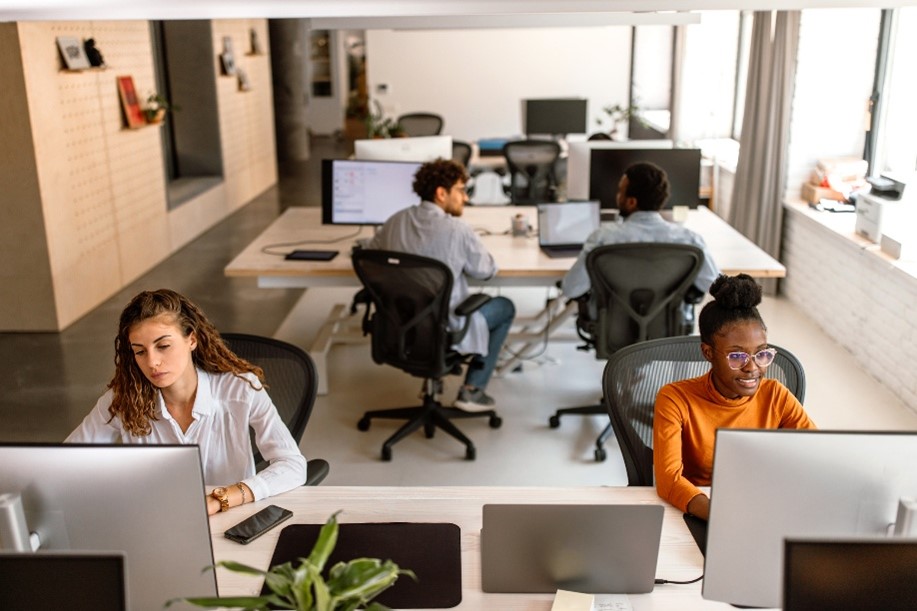
Offices look much different today than they did even a few years ago. While you’ll still find cubicles in your average workspace, more and more companies are transitioning to more dynamic, shared environments. Hot desking is growing in popularity, and as more workplaces adopt this setup, it’s important to know how to manage this layout effectively. Here’s what you need to know about hot desk management and best practices for success.
What Is Hot Desking?
Hot desking is a workspace system where employees don’t have assigned desks. Instead, they choose an available workspace when they arrive at the office. This setup is most common in hybrid work settings, where staff members split their time between working remotely and coming into the office.
The Benefits of a Hot Desk Office Space
A hot desk office space has plenty of advantages for employers and employees alike. You could benefit from:
- Reduced Real Estate Costs—If your employees work remotely part of the week, you don’t need to maintain a dedicated desk for every single person. Hot desking means you can downsize your office, lease a smaller space, and overall spend less on rent.
- Increased Collaboration—When people sit in different locations each day, they naturally interact with colleagues from other teams. Not only does cross-departmental interaction improve company culture, but it can also spark new ideas and facilitate better communication.
- Flexibility and Autonomy—Different tasks require different environments. An employee might need a quiet corner for deep work on Monday and a collaborative table for a team project on Tuesday. Hot desking gives workers the freedom to choose a workstation that best fits their daily goals.
The Challenges of a Hot Desk Office Layout
If you want to really be successful at hot desk management, you need to understand the challenges as well as the benefits. As you consider moving to a hot desk office layout, remember these potential concerns:
- If too many employees come into the office on a single day, it may be difficult to find a seat and be productive.
- Certain employees may have different IT and equipment needs that hot desking doesn’t accommodate as well.
- Sitting at a different desk each day could raise concerns about health, hygiene, and the spread of germs.
How to Manage Hot Desking Effectively
Transitioning to a flexible seating arrangement isn’t as complicated as you might think, but it will require some intentional planning. Here are some tips for how to manage hot desking effectively:
1. Implement Desk Booking Software
Relying on a first-come, first-served approach rarely works well for larger teams. Instead, use a booking system that lets employees reserve workspace before they arrive. This could be dedicated software or something as simple as a shared spreadsheet. Nonetheless, a reservation system provides peace of mind and ensures everyone has a guaranteed spot when they get to work.
2. Establish Zones
Freedom is good, but complete randomness can be counterproductive. So, consider dividing your office into specific zones. You can create a “quiet zone” for focused tasks and a “collaboration zone” for group discussions. Alternatively, you might assign specific neighborhoods to different departments. Clustering team members together allows them to work together easily while still enjoying flexible seating.
3. Standardize Workstation Equipment
Every hot desk should provide the same essential equipment. Equip each workstation with a universal docking station, an adjustable monitor, and ergonomic seating, as well as any items your specific team needs to function. When every desk is the same (and fully functional), employees won’t feel forced to compete for a handful of “good” desks.
Best Practices for Hot Desk Management
Beyond software and equipment, hot desking managers should be aware of a few best practices before fully committing to the layout. Implementing these practices can help make office space hot desking more comfortable and enjoyable for everyone:
- Encourage Clean Desks—Require employees to clear their desks at the end of the day. Personal items and loose papers should be removed so the station is ready for the next user.
- Clean Daily—In addition to a clean desk policy, have cleaning staff wipe down all shared surfaces each day. You might also provide easily-accessible hand sanitizer stations throughout the workspace.
- Gather Feedback—Send out monthly surveys to ask employees about their experience. Are there enough desks on Wednesdays? Is the Wi-Fi strong enough in the breakout areas? Listen to your team and adjust your approach as needed.
Moving to a hot desking model is a fantastic way to optimize your real estate and encourage a dynamic work environment. However, that doesn’t mean you need to rent a whole new office building. At Urban Office, we offer coworking solutions that feel a lot like hot desking in Houston and San Antonio, TX. Contact us to learn more about our locations, affordability, and convenient options.